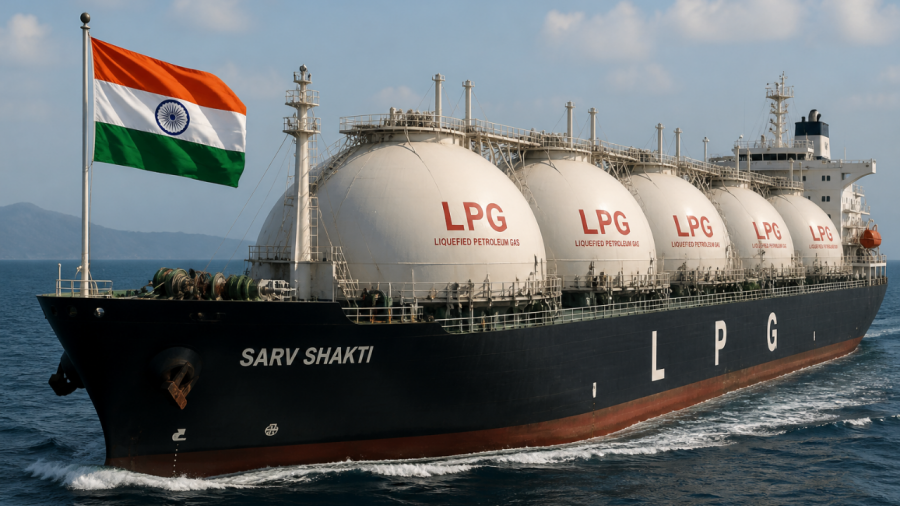
India’s Energy Security at Stake as Sarv Shakti Navigates Hormuz
The Strait of Hormuz has long been recognized as a vital artery for global oil and gas shipments, and now, it is the setting for a pivotal moment in India’s energy strategy. The LPG supertanker Sarv Shakti, carrying 45,000 tonnes of liquefied petroleum gas (LPG), is currently making its way through these treacherous waters. Its successful passage could provide a significant boost to India’s energy supply amid rising geopolitical tensions in the Middle East.
The Importance of the Strait of Hormuz
Situated between Oman and Iran, the Strait of Hormuz is one of the world’s most strategic chokepoints, with about 20% of the global oil trade passing through it. The region has been marked by escalating tensions, particularly due to disputes involving Iran, which has threatened to disrupt shipping routes. As a major consumer of LPG, India heavily relies on imports to meet its domestic energy needs, making the successful transit of the Sarv Shakti crucial.
Challenges in the Current Climate
India’s energy landscape has been increasingly turbulent, with various factors contributing to supply disruptions. The ongoing conflict in Ukraine, coupled with fluctuating global oil prices and regional instability, has pushed the nation to seek alternative sources and routes for its energy supply. The Sarv Shakti’s journey through the Strait of Hormuz embodies India’s proactive approach in securing vital energy resources.
A Symbol of Resilience
The Sarv Shakti’s voyage is not just about transporting fuel; it represents India’s resilience in the face of adversity. The vessel’s journey is a testament to the Indian government’s commitment to ensuring energy security for its citizens. As domestic demand for LPG continues to rise, particularly for cooking and heating during the colder months, the successful delivery of this shipment could alleviate some of the pressures faced by consumers.
Broader Implications for Energy Supply
If Sarv Shakti successfully crosses the Strait of Hormuz, it could set a precedent for future LPG shipments from the Middle East to India. This would not only enhance India’s energy security but also reflect the country’s growing assertiveness in international energy markets. Furthermore, it may encourage other shipping companies to navigate these waters, despite the risks involved.
Conclusion: A Critical Moment for India
As the Sarv Shakti approaches one of the world’s most dangerous maritime routes, all eyes are on its progress. The successful crossing of the Strait of Hormuz could symbolize a turning point for India’s energy strategy in a time of global uncertainty. With its economy increasingly reliant on imports to meet energy demands, India’s ability to navigate these challenges will be critical for its future growth and stability.
- Key Takeaways:
- India’s LPG supertanker is navigating a critical energy route.
- The Strait of Hormuz is vital for global oil and gas shipments.
- India faces supply disruptions due to geopolitical tensions.
- The journey signifies India’s commitment to energy security.
- Successful passage could enhance India’s position in international energy markets.