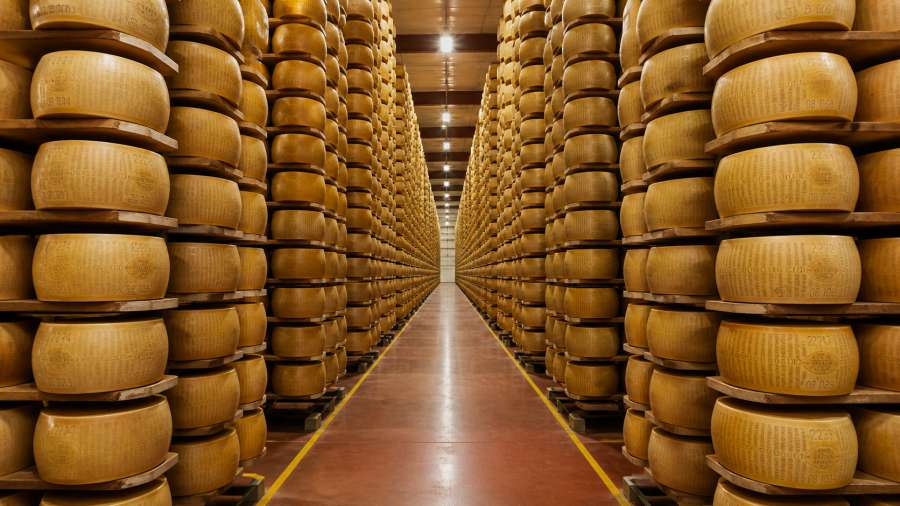
The Parmigiano Vault: How Italy’s ‘Cheese Banks’ Power a €4 Billion Industry
In the heart of Emilia-Romagna, a region celebrated for its culinary heritage, a unique financial system is quietly sustaining one of Italy’s most cherished products: Parmigiano Reggiano cheese. With hundreds of thousands of wheels of this iconic cheese stored in climate-controlled warehouses, these facilities serve a dual purpose—preserving the cheese and acting as collateral for loans, ensuring that producers can navigate the challenges of cash flow that arise from Parmigiano’s lengthy aging process.
The Aging Process of Parmigiano Reggiano
Parmigiano Reggiano is not just cheese; it’s a labor of love that requires time, patience, and precision. The production of this cheese involves a meticulous process that starts with high-quality milk from local cows and ends with wheels that can age for a minimum of 12 months. Many producers choose to age their cheese for 24 months or even longer, leading to a product that is rich in flavor and texture. However, this extended aging process presents a significant challenge: producers must manage their cash flow without immediate returns.
Cheese as Collateral
This is where the concept of ‘cheese banks’ comes into play. These warehouses, often referred to as cheese vaults, store the aging wheels of Parmigiano Reggiano under controlled conditions that maintain optimal humidity and temperature. The stored cheese becomes a form of collateral for producers who need to secure loans to continue their operations. The value of the cheese, which can reach up to €50 per wheel depending on its age and quality, provides a safety net for producers navigating the financial landscape of the dairy industry.
Maintaining Quality and Tradition
The Parmigiano Reggiano Consortium oversees the strict regulations governing the production of this cheese, ensuring that only the highest standards are maintained. This rigorous quality control is essential not only for preserving the cheese’s reputation but also for its financial viability. The aging process is not just a matter of time; it is a science that requires the expertise of skilled cheesemakers.
Economic Impact on Emilia-Romagna
The Parmigiano Reggiano industry contributes approximately €4 billion to Italy’s economy, a testament to its significance not just in culinary terms but also as a critical economic driver in the Emilia-Romagna region. The cheese banks not only support producers but also help sustain local employment and maintain the traditional practices that make Parmigiano Reggiano unique.
Challenges and Opportunities
Despite the robust framework of cheese banks, producers face challenges that include market fluctuations and changing consumer preferences. The COVID-19 pandemic highlighted vulnerabilities in the supply chain, yet it also created opportunities for innovation. Many producers have begun exploring direct-to-consumer sales through online platforms, thereby increasing their market reach while maintaining the integrity of their product.
Conclusion
As the world continues to embrace the rich flavors of Parmigiano Reggiano, the innovative financial systems supporting its production play a crucial role in ensuring its future. The cheese banks of Emilia-Romagna not only preserve the physical product but also safeguard the livelihoods of those dedicated to producing one of Italy’s most beloved culinary treasures. In this unique intersection of agriculture and finance, the story of Parmigiano Reggiano serves as a reminder of the complexities that underpin our favorite foods.