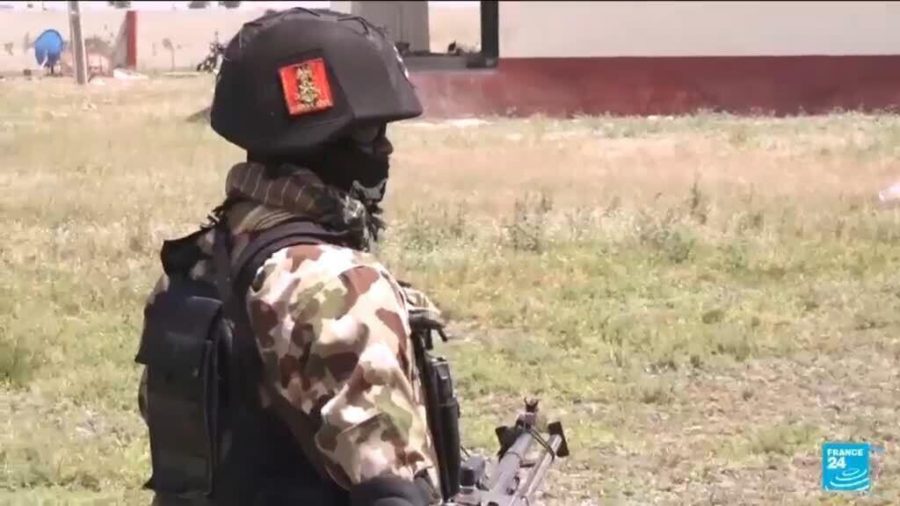
A senior leader of the Islamic State (IS) group in Nigeria has been killed in a joint military operation conducted by U.S. and Nigerian forces, U.S. President Donald Trump announced recently. The high-profile mission marks a significant blow to the terror group’s operations in West Africa, underscoring the strengthened cooperation between the two nations in combating extremist threats.
A High-Stakes Operation
Details of the operation remain classified, but sources within both governments indicate it was meticulously planned over several months. The mission targeted a high-ranking militant responsible for orchestrating numerous attacks in the region, including assaults on civilians, military installations, and critical infrastructure.
President Trump, addressing reporters, praised the collaboration between the U.S. and Nigerian forces, stating, “This successful mission is a testament to the extraordinary skill and bravery of our military and their Nigerian counterparts. Together, we are committed to disrupting and dismantling terrorist networks wherever they operate.”
Who Was the Target?
Although the identity of the militant leader has not been officially disclosed, intelligence analysts suggest the individual was a key figure within IS’s West Africa Province (ISWAP), a faction that has been responsible for escalating violence in the Lake Chad region. ISWAP, an offshoot of Boko Haram, has pledged allegiance to the broader Islamic State group and has become one of the most active and deadly jihadist groups in Africa.
The targeted leader was reportedly involved in planning and executing high-profile attacks, as well as recruiting and radicalizing young fighters in Nigeria and neighboring countries. The removal of such a critical figure is expected to disrupt the group’s operational capabilities, at least in the short term.
Strengthening US-Nigeria Security Ties
This operation highlights the growing partnership between the U.S. and Nigeria in counterterrorism efforts. While the U.S. has provided intelligence, training, and equipment to Nigerian forces in the past, this mission marks a new level of direct collaboration. Experts believe this could signal a shift in strategy, with greater emphasis on joint missions to combat the growing threat of terrorism in Africa.
In recent years, the Islamic State group has sought to expand its influence across Africa, taking advantage of weak governance and existing security challenges. The group has established strongholds in regions like West Africa and the Sahel, posing a significant threat to both local and international security. This joint operation sends a clear message that such expansion will not go unchecked.
Global Implications
The successful elimination of a senior IS leader in Nigeria is likely to have wider geopolitical implications. For the U.S., it reaffirms its commitment to fighting terrorism on a global scale, even as its focus shifts to other regions like the Indo-Pacific. For Nigeria, the operation could bolster its efforts to combat insurgency and reassure citizens that progress is being made in ensuring their safety.
However, experts caution that the fight against terrorism is far from over. ISWAP and similar groups have shown resilience, often regrouping and adapting after such setbacks. Continued vigilance and sustained international cooperation will be key in preventing the resurgence of these groups.
The Road Ahead
As details of the operation emerge, the international community will likely keep a close eye on the aftermath. For now, the joint U.S.-Nigeria mission serves as a reminder of the importance of global partnerships in addressing shared security challenges. Whether this marks a turning point in the fight against IS in West Africa remains to be seen, but for now, it is a moment of triumph for the forces involved.
Both nations have pledged to continue their cooperation, with the hope of further weakening extremist groups and restoring stability to the region. As President Trump concluded in his remarks, “Together, we will prevail against terrorism wherever it rears its ugly head.”