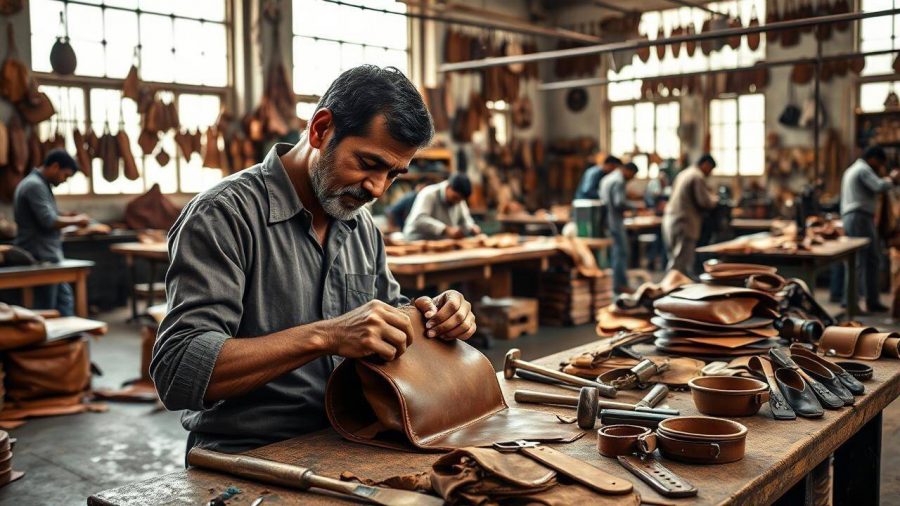
Leather and Footwear Industry Faces Rising Input Costs
The leather and footwear sector in India is grappling with an alarming surge in input costs, which have risen by 40-60% due to the ongoing crisis in the Middle East. This unexpected escalation is primarily affecting prices of petroleum-based materials and imports, which are vital for production.
Impact of the Middle East Crisis
The current geopolitical tensions in the Middle East have resulted in substantial fluctuations in global oil prices, leading to increased costs for raw materials essential to the leather and footwear industry. As petroleum-based products become more expensive, manufacturers are feeling the pinch, which threatens to undermine the profitability of companies already operating on thin margins.
Call for Government Intervention
In light of these challenges, industry representatives are appealing to the Indian government for immediate action. They are seeking exemptions from import duties on raw materials and machinery, arguing that such measures are crucial for mitigating the rising expenses and helping to bolster domestic manufacturing capabilities.
The Need for Raw Material Imports
Many manufacturers rely heavily on imported raw materials to meet production demands. With tariffs on these imports increasing, companies are facing difficult choices: either absorb the costs, which could lead to reduced profit margins, or pass them onto consumers, potentially making their products less competitive in the market.
Potential Consequences of Inaction
If the government does not intervene, the repercussions could be severe. The leather and footwear industry, which contributes significantly to India’s export economy, could see a decline in production capacity, resulting in job losses and reduced competitiveness on the international stage.
Strengthening Domestic Manufacturing
Industry leaders argue that providing import duty exemptions is not just a short-term solution but a long-term investment in strengthening domestic manufacturing. By reducing the financial burden on manufacturers, the government can help ensure that the sector remains viable and competitive in the face of global challenges.
Conclusion
As the crisis in the Middle East continues to exert pressure on the leather and footwear industry in India, the call for government support is becoming increasingly urgent. The industry’s future hangs in the balance, and timely intervention could be the key to navigating these turbulent waters.