Introduction
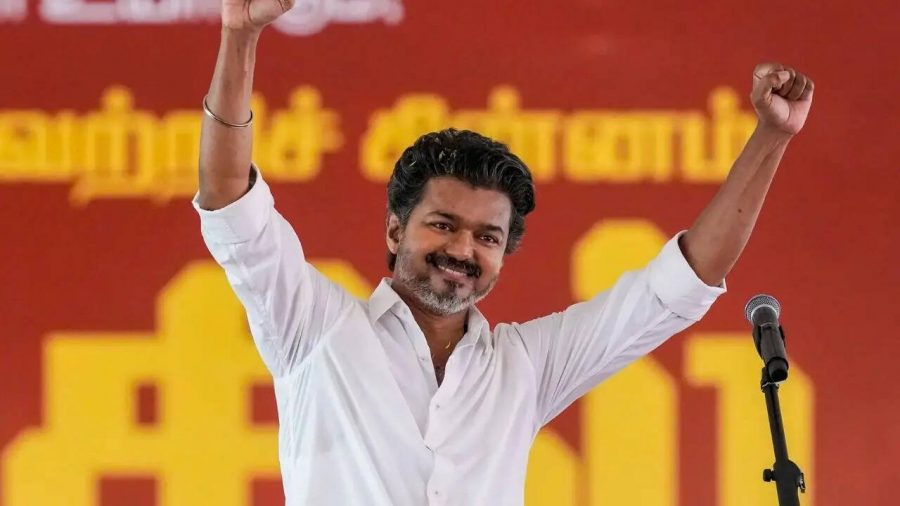
In a significant development for Tamil Nadu’s political landscape, actor-turned-politician Vijay Thalapathy has launched his new party, Tamil Desiya Katchi (TVK). With ambitions to disrupt the traditional dominance of the Dravida Munnetra Kazhagam (DMK) and the All India Anna Dravida Munnetra Kazhagam (AIADMK), the question looms large: will Vijay emulate Arvind Kejriwal’s success in Delhi or follow in the footsteps of political strategist Prashant Kishor in Bihar?
The Political Landscape
Tamil Nadu has long been characterized by a two-party system, with the DMK and AIADMK alternating in power for decades. The emergence of TVK adds a new dimension to this entrenched political rivalry. As a beloved film star, Vijay enjoys a massive fan base, which could translate into significant political capital.
Vijay’s Aspirations
Vijay’s entry into politics is not merely a publicity stunt; it is a calculated move aimed at harnessing his popularity to effect change in Tamil Nadu. His supporters believe that he can bring a fresh perspective to governance, much like Kejriwal did for Delhi, where he capitalized on public discontent with established parties.
Exit Polls and Projections
Preliminary exit polls indicate that TVK is poised for a notable debut in the upcoming elections. Some projections suggest that the party could secure a substantial percentage of the vote, potentially acting as a spoiler in the contest between DMK and AIADMK. However, the political analysts are divided on the impact of TVK’s entry.
- Proponents argue that Vijay’s popularity could rally a significant segment of disenchanted voters.
- Critics warn that TVK may inadvertently split the anti-incumbency vote, allowing either DMK or AIADMK to retain power.
Public Sentiment
As Vijay embarks on his political journey, public sentiment remains a crucial factor. While many fans are enthusiastic about his foray into politics, others express skepticism about whether a film star can effectively navigate the complexities of governance. Public rallies and campaign events are expected to gauge his appeal among various demographics.
The Kejriwal-Kishor Comparison
Political observers are drawing parallels between Vijay and two distinct political trajectories: Kejriwal’s Aam Aadmi Party (AAP) and Kishor’s initiatives in Bihar. Kejriwal’s rise to power was marked by a grassroots movement that resonated with the electorate’s aspirations for honesty and transparency. In contrast, Kishor’s efforts in Bihar, while strategically sound, faced challenges due to the entrenched political culture.
The crux of the comparison lies in how Vijay chooses to position TVK. Will he focus on a reformative agenda akin to Kejriwal, or will he try to consolidate his base with populist promises reminiscent of Kishor’s approach?
Challenges Ahead
Despite the initial enthusiasm, Vijay’s path is fraught with challenges. The established political machinery of DMK and AIADMK is not to be underestimated. Both parties possess deep-rooted networks and resources that can be formidable obstacles for newcomers. Furthermore, Vijay must articulate clear policies and a vision that resonates beyond his celebrity status to attract a diverse voter base.
Conclusion
As the political landscape in Tamil Nadu evolves, the emergence of TVK could signify a pivotal moment in the state’s electoral history. Whether Vijay Thalapathy can establish himself as a formidable political force or merely a spoiler in an already divided electorate remains to be seen. The upcoming elections will be a litmus test for his ambitions and the future of Tamil Nadu politics.