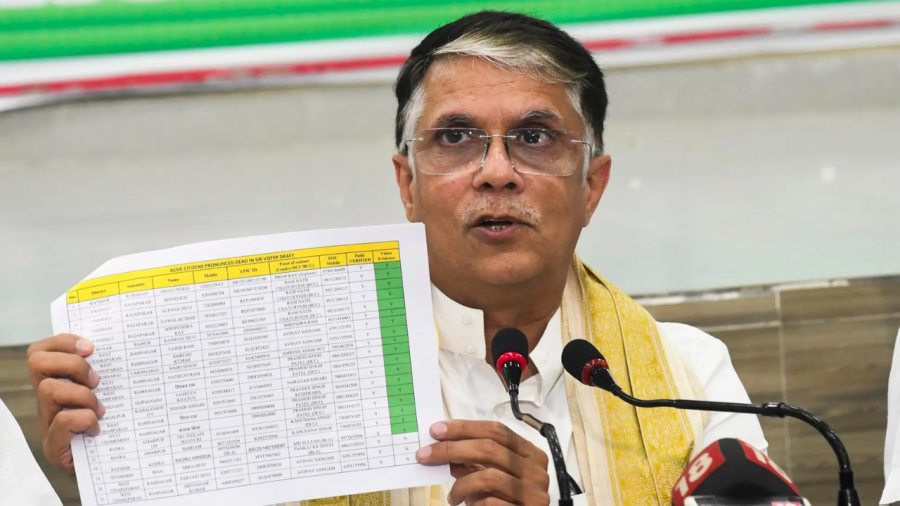
Supreme Court Weighs in on Political Battle: Pawan Khera vs. Himanta Biswa Sarma
In a significant ruling that underscores the intersection of law and politics in India, the Supreme Court has granted anticipatory bail to Congress spokesperson Pawan Khera. This decision comes amidst a backdrop of escalating political tensions between Khera and Assam Chief Minister Himanta Biswa Sarma, highlighting the often contentious nature of political discourse in the country.
Allegations and Counter-allegations: A Political Clash
The case revolves around allegations made by Khera against the wife of Assam Chief Minister Himanta Biswa Sarma and her subsequent counter-allegations against him. The Supreme Court, in its judgment, observed that the allegations appear to be politically motivated rather than grounded in genuine legal grievance.
During the hearings, the court placed significant emphasis on the principle of personal liberty. The justices expressed that custodial interrogation, in this instance, was unnecessary, particularly given the political dynamics at play. This ruling has been hailed as a protective measure for political figures who may find themselves at the receiving end of politically charged accusations.
The Legal Landscape
The Supreme Court’s decision is a reminder of the delicate balance that must be maintained between political rivalry and legal accountability. In recent years, there has been an increasing trend of politicians facing legal challenges, often perceived as being influenced by their political affiliations. The court’s ruling in favor of Khera could signal a shift towards greater scrutiny of such politically motivated cases.
Khera’s Response and Political Implications
Following the court’s decision, Khera expressed relief, stating that the ruling reinforces the idea that political discourse should not be undermined by the misuse of legal mechanisms. His comments reflect a growing concern among opposition leaders regarding the use of law enforcement as a tool for political retribution.
Political analysts suggest that this case could set a precedent for how similar disputes are handled in the future. As the political landscape in India continues to evolve, instances like Khera’s can influence public perception and the strategies employed by political parties.
Public Reaction and the Road Ahead
The public reaction to the ruling has been mixed, with supporters of Khera viewing it as a victory for democratic principles, while critics argue that it may embolden political leaders to make unfounded accusations without fear of repercussions. Social media platforms are buzzing with discussions about the implications of this ruling, with many users calling for a more transparent and accountable political process.
As the political battle between Khera and Sarma unfolds, it remains to be seen how this will impact the Congress party’s standing in Assam and beyond. With upcoming elections on the horizon, the stakes are high, and both parties are likely to leverage this situation to their advantage.
Conclusion
The Supreme Court’s intervention in the Khera-Sarma dispute highlights the critical role of the judiciary in safeguarding personal liberties while navigating the murky waters of political rivalry. As India moves forward, the implications of this ruling will resonate across the political spectrum, prompting both lawmakers and citizens to reflect on the nature of political accountability and the sanctity of legal processes.