Strait of Hormuz: A Crucial Maritime Crossroads
The Strait of Hormuz, a vital waterway for global oil supplies, has become a flashpoint for military tensions between Iran and the United States. Recently, the situation escalated dramatically, with both nations trading attacks in the region, leaving thousands of seafarers stranded in an increasingly perilous environment.
Current Situation: A Diplomatic Dilemma
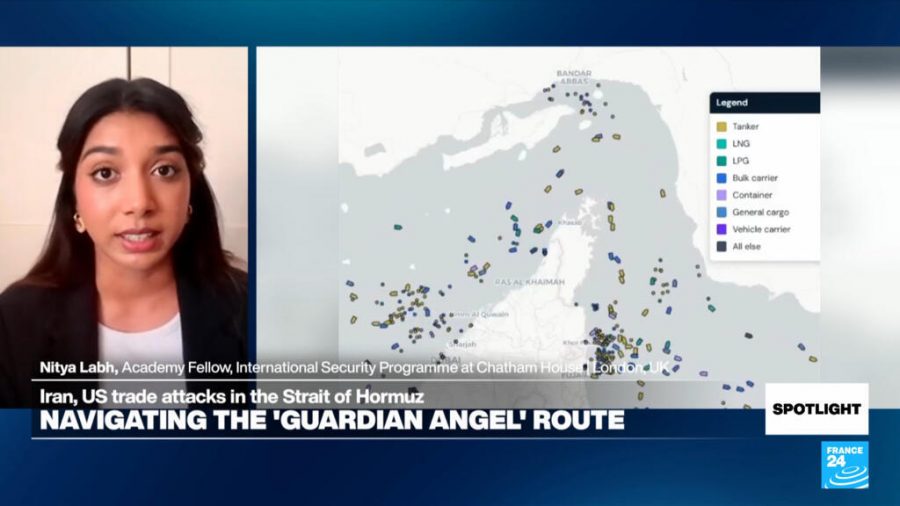
As tensions simmer, approximately 11,000 crew members aboard various vessels find themselves caught in a precarious predicament. With no clear path to safety, these individuals are receiving conflicting instructions from two opposing sides as diplomatic efforts to negotiate peace unfold.
Iran’s Stance: Evacuation via Larak Island
The Iranian regime has urged the stranded seafarers to evacuate but has mandated that they traverse through Larak Island, situated at the northern end of the Strait. This direction raises concerns about the safety and motivations behind Iran’s guidance, as many question whether it serves as a genuine attempt at assistance or a strategic maneuver to assert control over the region.
The Role of International Observers
In the midst of these tensions, international observers and experts are closely monitoring the situation. Gavin Lee of France 24 recently spoke with Nitya Labh, an Academy Fellow at Chatham House’s International Security Programme, to gain insights into the ongoing conflict and the broader implications for maritime security.
International Security Concerns
Labh noted that the Strait of Hormuz is not only vital for oil transport but also serves as a critical passage for global trade. The disruption of maritime activities in this corridor could have far-reaching consequences, not only for the countries directly involved but also for the international community reliant on stable energy supplies.
Potential Pathways to Resolution
As diplomatic channels remain open, the international community is urging both Tehran and Washington to de-escalate tensions. The complexity of the situation, however, poses a significant challenge. Labh emphasized the need for a coordinated response that prioritizes maritime safety while addressing the underlying geopolitical issues at play.
Conclusion: A Call for Calm
With the situation in the Strait of Hormuz continuing to evolve, the safety of the 11,000 crew members hangs in the balance. As both the US and Iran navigate this tense landscape, the call for calm and rational dialogue has never been more pressing. The world watches closely, hoping for a resolution that ensures the safety of all those caught in the crossfire of international politics.