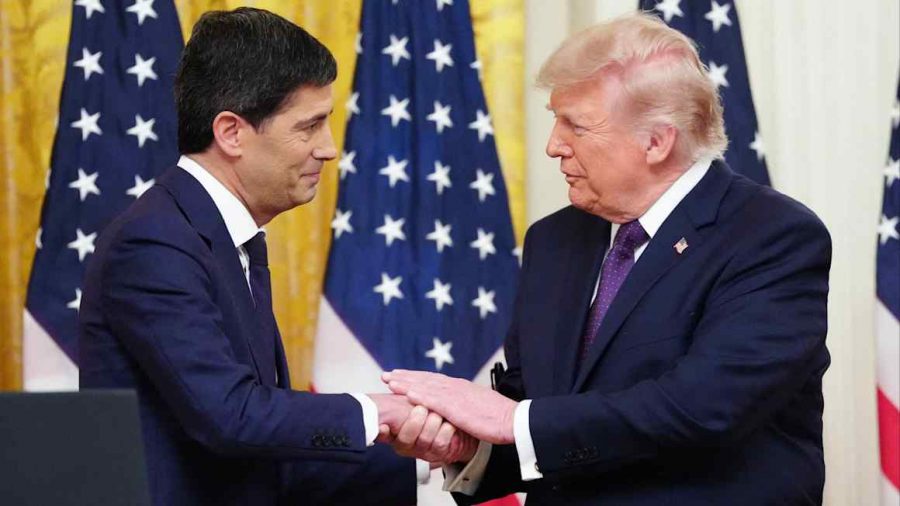
Trump Urges Rate Cuts as Pressure Mounts on Federal Reserve Nominee Warsh
In a bold move that has sent ripples through financial markets, President Donald Trump has intensified his call for the Federal Reserve to lower interest rates, placing significant pressure on his nominee for the central bank position, Kevin Warsh. As speculation mounts regarding a potential rise in borrowing costs, Trump’s comments have reignited a contentious debate over the direction of U.S. monetary policy.
The Stakes Are High
Trump’s remarks come amid growing concerns among economists and market analysts that the Federal Reserve may be poised to increase interest rates in the near future. The President’s insistence on a rate cut underscores his belief that lower borrowing costs are essential for sustaining economic growth and job creation. With the U.S. economy showing signs of slowing down, many are questioning whether the Fed’s current approach is appropriate.
Warsh’s Role in the Central Bank
Kevin Warsh, a former Federal Reserve governor, has emerged as a key figure in this unfolding drama. As Trump’s nominee for the central bank, Warsh is expected to align with the President’s views on monetary policy, particularly in light of Trump’s recent pronouncements. However, his previous tenure at the Fed has led some to speculate about how he will navigate the delicate balance between political pressure and economic stability.
Market Reactions and Economic Indicators
Financial markets have reacted with volatility to Trump’s comments, reflecting investor uncertainty about the future of U.S. monetary policy. Following the President’s statement, stock prices fluctuated, and bond yields fell, as traders adjusted their expectations regarding interest rates. Economic indicators such as unemployment rates and inflation figures are being closely monitored to gauge the Fed’s next moves.
Arguments for Lowering Rates
Proponents of lower interest rates argue that reducing borrowing costs could stimulate consumer spending and business investment, ultimately leading to stronger economic growth. They contend that a proactive approach is needed to counteract potential headwinds such as trade tensions and geopolitical uncertainties.
Counterarguments and Risks
On the other hand, critics of a rate cut caution that keeping rates too low for too long could lead to asset bubbles and financial instability. They argue that a more cautious approach is warranted, particularly given the already low unemployment rates and moderate inflation levels. These conflicting viewpoints highlight the challenges facing the Federal Reserve as it seeks to navigate the complexities of the current economic landscape.
The Path Forward
As Trump continues to apply pressure on Warsh and the Federal Reserve, the central bank’s decision-making process is likely to come under intense scrutiny. With the stakes higher than ever, all eyes will be on Warsh as he prepares to face confirmation hearings and articulate his vision for U.S. monetary policy.
Ultimately, the debate over interest rates is not just a matter of economic theory; it holds significant implications for millions of Americans whose financial well-being is intricately tied to the decisions made by the Federal Reserve.
- President Trump calls for rate cuts amid economic concerns.
- Kevin Warsh, Trump’s nominee, faces pressure to align with the President.
- Market volatility reflects uncertainty over future Fed policies.