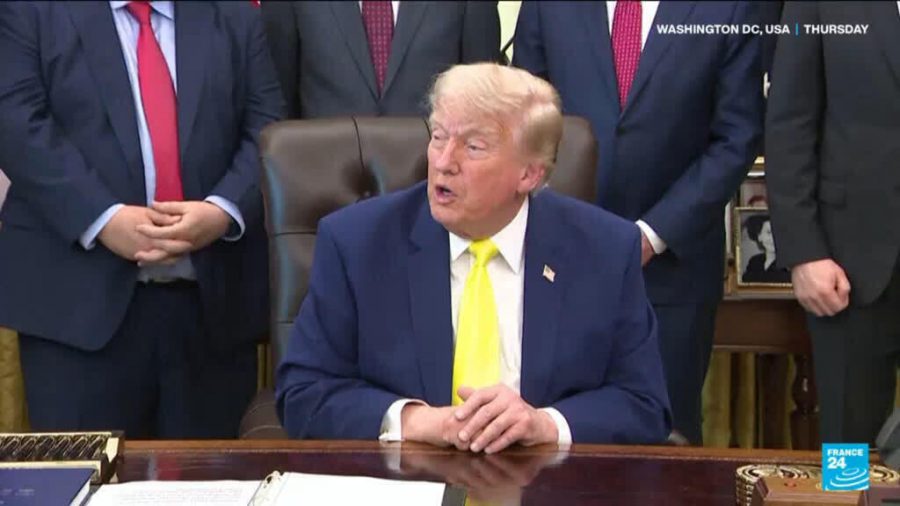
US Government Takes Firm Stance Against Cuban Leadership
In a significant escalation of its diplomatic efforts, the United States announced new sanctions on Thursday targeting key figures in the Cuban government, including President Miguel Díaz-Canel and several members of the influential Castro family. This move underscores Washington’s continued strategy to apply pressure on the communist-led regime in Havana, aiming to promote democratic reforms and address human rights abuses.
Details of the Sanctions
The sanctions, which are part of a broader campaign to isolate the Cuban leadership, specifically name President Díaz-Canel, his immediate family members, and notable descendants of former President Raul Castro. Although Raul Castro has stepped down from official duties, he remains a pivotal player in Cuban politics, making his family members even more significant targets for U.S. sanctions.
Among those sanctioned are Raul Castro’s son, Alejandro Castro Espín, and his grandson, which sends a clear message that the U.S. will not tolerate oppressive governance or human rights violations. The sanctions aim to freeze any U.S. assets held by these individuals and prohibit American citizens from engaging in business or personal dealings with them.
Background of U.S.-Cuba Relations
The relationship between the United States and Cuba has been fraught with tension for decades, particularly since the Cuban Revolution in 1959. The U.S. has utilized various measures, including trade embargoes and travel restrictions, in an attempt to influence the political landscape of the island nation. In recent years, the Biden administration has signaled a willingness to engage with Cuba but has also faced criticism from both sides of the political spectrum regarding its approach.
Human Rights Concerns
Human rights organizations have long accused the Cuban government of suppressing dissent, limiting freedom of expression, and engaging in arbitrary detentions. The latest sanctions are intended to highlight these issues and hold accountable those who perpetuate authoritarian practices. Activists believe that targeting the Castro family is a strategic move to undermine the legitimacy of the current regime, which has relied heavily on the legacy of the Castro leadership.
Reactions from the Cuban Government
The Cuban government has condemned the sanctions, framing them as an attack on the sovereignty of the nation and an effort to destabilize its political system. Officials in Havana have reiterated their commitment to socialism and accused the U.S. of hypocrisy, given its own record on human rights. The regime has promised to continue its fight against what it describes as U.S. imperialism.
Looking Ahead
As the United States continues to apply pressure on Cuba, the effectiveness of these sanctions remains to be seen. While they may serve to rally international support for human rights in Cuba, they also risk exacerbating the already challenging living conditions for ordinary Cubans. Critics argue that sanctions often hurt the very people they are intended to help, leading to increased hardship and suffering.
Conclusion
The imposition of sanctions on President Díaz-Canel and the Castro family marks a significant moment in U.S.-Cuba relations, reflecting the ongoing complexities of diplomatic negotiations with the communist regime. As both nations navigate this turbulent relationship, the impact of these sanctions will likely unfold in the coming months, shaping not only the political landscape of Cuba but also the lives of its citizens.